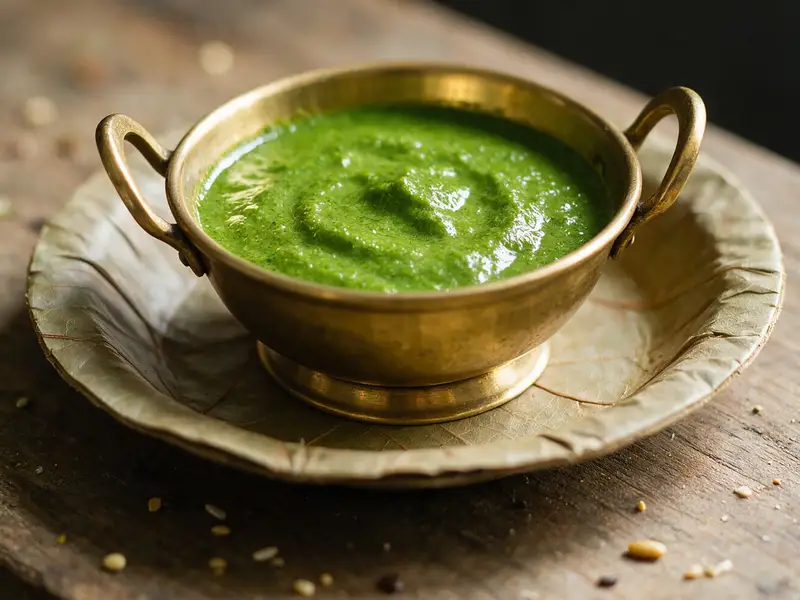
Chutney (generic)
What every chutney shares: how to grind and cook it, how long it keeps, and how to fix one that turns too thick.
Also called: chutney, chutney (generic), chutneys, cooked chutney, pachadi, thogayal
Measures
- Storage: 7–8 days
If something goes wrong
Chutney preserve too thick or sets hard once cold
- Cooked until thick in the pan Few sources say this.
- Stop cooking while it is still semi-thick; it thickens as it cools. to prevent
Take care
- Very fiery chutneys like thecha or Naga-style tomato-garlic chutney should be eaten in small amounts with a meal;
- Do not keep fresh ground chutneys containing coconut, or fresh tomato pachadi, longer than about 2–3 days.
- Grind chutney with filtered or boiled-and-cooled water if you want it to keep longer.
- A little boiled, cooled milk makes peanut chutney pale like hotel chutney, but leave it out if the chutney is to be stored for a few days.
- Take stored chutney out only with a clean, dry spoon, close the jar tightly, and keep moisture out, or it spoils.
- Dry washed gongura (or other) leaves completely before cooking a keeping pachadi; leftover moisture makes it spoil.
Questions answered
Useful tips
- Onion chutney bitterness and colour. Onion chutney can turn slightly bitter if you use too many onions or roast the chillies dark brown; the longer the chillies roast, the darker the chutney. Few sources say this.
- Avoid bitter sesame chutney. Sesame chutney turns bitter if the seeds burn or if you use more sesame than the recipe asks; roast on medium, stirring constantly, and treat timings as a guide.
- Rescue a bitter or too-hot chutney. Fix a bitter or too-hot chutney by adding coconut (sesame chutney) or tamarind plus a little jaggery (ginger chutney); bitterness also eases after chilling.
- Ready chutneys and podis save rushed mornings. Keeping chutneys and podis ready helps on rushed mornings, when side dishes are often the hardest part. Few sources say this.
- Sweeten fruit chutneys after the fruit softens. For a soft fruit pulp, sauce or chutney, cook the fruit in plain water until it breaks down and add the sugar afterwards.
Another view: A teaspoon of sugar added with the mango helps it soften; it can be left out. Some add a teaspoon of sugar with the raw mango to help it soften, or leave it out; others cook the fruit in plain water first and add sugar only once it is soft. Sugar added early tends to keep the pieces firm.
- Tadka on chutney as a garnish. Pour the hot tadka onto the finished chutney and swirl it only lightly, so some stays visible as a garnish. Few sources say this.
- Resting semolina-coconut chutney. Let semolina-coconut chutney stand about 30 minutes so the semolina swells, then chill at least 2 hours; it keeps a week and cannot be frozen. Few sources say this.
- Stop sugar-vinegar chutney while semi-thick. Stop cooking a sugar-and-vinegar chutney while it is still only semi-thick; it keeps thickening as it cools. Few sources say this.
- Warm chilled chutney gently, never boil it. Bring chilled chutney to room temperature or warm it slightly before serving; do not boil it, since reheating changes its flavour.
- Chutney thickness depends on style and use. Match thickness to use: dosa chutney is kept thicker and spicier, idli chutney thinner; pottukadalai and methi chutneys are meant fairly runny.
- Add water to chutney a little at a time. When grinding chutney, add water gradually, a spoon at a time; too much makes it thin and dulls its flavour.
- Make-ahead tricks for fresh chutneys. To make coconut chutney ahead, grind it without water, refrigerate, and thin it just before serving; for peanut chutney, roast the night before and grind in the morning.
- Thick, coarse thogayal and thuvaiyal. Thogayal (thuvaiyal) and similar rice chutneys are ground thick and coarse with little or no water, never runny, which suits mixing with rice.
- Soak dried chillies before grinding into chutney. Soak dried red chillies in hot water for about 10–15 minutes before grinding; they grind smoother and give the chutney its colour.
- Guntur chillies for Andhra peanut chutney. Guntur dried chillies are the traditional choice for Andhra-style peanut chutney. Few sources say this.
- Adjust chutney heat to taste. To tame a fiery chutney such as thecha, use fewer or seeded chillies, pale green rather than dark green ones, or add more lemon, nuts or fresh herbs.
- Roast chutney dals gently until golden. Roast dals for chutney on low to medium heat, stirring all the time, until golden and nutty; over-browned or burnt bits make the chutney bitter.
- Roast and grind chutney ingredients separately. Fry or dry-roast each chutney ingredient separately where possible, since they cook at different speeds and none should burn; some grind each on its own too.
- Black vs white sesame in ellu chutney. Black sesame's bran gives ellu chutney its nutty flavour and texture; white sesame works but tastes different. Few sources say this.
- Sesame oil for South Indian chutneys. Sesame (gingelly) oil gives South Indian chutneys such as onion and kara chutney their most traditional flavour, though any neutral oil works.
- Roast thogayal dal in ghee for flavour. Roasting the dal for paruppu thogayal in ghee rather than oil gives more flavour. Few sources say this.
- Dry chutney powders keep longer. Make a chutney without water and with little oil and it becomes a storable powder, like paruppu podi or dry curry leaf chutney, which keeps far longer.
- Dry chutney powders: grainy, not fine. Grind dry chutneys such as shengdana or vada pav garlic chutney without water to a slightly grainy, coarse powder rather than a fine one.
- Stir chutney powder into curd for a spread. Stir shengdana (peanut) chutney powder into curd for a quick spread for roti or bread. Few sources say this.
- Vinegar and oil help a chutney keep. Vinegar stirred in at the end adds tang and helps a fruit chutney last; a fresh fruit chutney without vinegar or much oil does not keep well.
- Cool cooked chutney fully before jarring. Let cooked chutney cool fully to room temperature before packing it into a clean, sterilised glass jar and refrigerating.
- Simmer chutney briefly after adding the tempering. After pouring in the tempering, simmer or bring the chutney to a boil briefly, about ten minutes on low for kara chutney, so flavours come together.
- Dry the coconut before grinding thogayal. Saute grated coconut in the hot pan until it dries out before grinding it into thogayal; roasting it golden also helps the chutney keep longer.
- Cook off the water before grinding a cooked chutney. To avoid a watery cooked chutney, cook tomatoes or fruit until pulpy and most liquid has gone, cool completely, then blend without water.
- Choose ripe red tomatoes for chutney. Ripe, red, juicy tomatoes, such as Roma, usually give tomato chutney the best colour and taste. Few sources say this.
- Tomato chutney variations. For a quick tomato chutney, blend raw tomatoes with green chillies and finish with a tempering, like a salsa; adding fresh coriander or mint when grinding freshens it. Few sources say this.
- Onion chutney variations. Saute a ripe tomato with the onions for a variation; the tempering is optional, some cooks keep onion chutney thick and untempered.
- Raw versus cooked garlic in chutney. Raw garlic gives chutney a sharp pungency; cooking it with tomatoes, roasting or charring it gives a mellower or smoky taste, and lemon softens raw garlic's bite.
- Use fresh garlic for garlic chutney. Use fresh garlic for lehsun ki chutney; old garlic can make the chutney bitter.
- Lemon and chilli powder in garlic chutney. Red chilli powder gives garlic chutney its bright red colour and zing, and a squeeze of lemon at the end adds tang and balances the heat.
- Let chutney rest so flavours meld. Rest freshly made ginger or garlic chutney for 20–30 minutes to a few hours so the flavours come together.
- Young tender ginger for ginger chutney. Choose young, tender ginger for ginger chutney; mature, fibrous ginger tastes harsh or bitter. Few sources say this.
- Balance fenugreek bitterness in chutney. Jaggery balances the bitterness of fenugreek in methi chutney; with fewer chillies, cut the fenugreek back too, since chilli heat offsets its bitterness.
- Ridge gourd peel chutney. Ridge gourd peel is edible and fibre-rich, so it can be made into its own chutney instead of being thrown away. Few sources say this.
- Serve Bengali sweet chutneys cool. Serve kancha aamer and olive chutneys at room temperature or chilled, never hot.
- Adjust sugar in sweet chutneys. Match sugar to the fruit's sourness, using less with sweet tomatoes or added dates; a pinch of brown sugar balances a chutney that is too salty or hot.
- Tamarind thickens and balances sweet chutney. Tamarind's sourness offsets the sugar in a sweet chutney and also helps it thicken. Few sources say this.
- Loosen a chutney that thickened. If a chutney thickens on standing or in the fridge, loosen it with a little hot water before serving, adding it a teaspoon at a time.
- Plum chutney tips. Pick soft, ripe plums for aloo bukhara chutney, and roast the melon seeds on low heat until they puff without browning. Few sources say this.
- Kashmiri walnut chutney. For walnut chutney, simmer walnuts 2–3 minutes and discard the water, then grind, scraping down the blender often so no hard bits remain.
- Yogurt radish chutney. For Kashmiri radish yogurt chutney, hang homemade yogurt for a couple of hours for a thicker, creamier result.
- Thickening olive chutney. Boil olives until tender before adding sugar and reducing; a little plain flour slurry stirred in at the end thickens the syrupy chutney.
- Other uses for kokum chutney. Thin kokum chutney with chilled water or soda and salt for a quick kokum sharbat, and keep the kokum soaking water for amsool saar.
- Semi-smooth texture for tomato-garlic chutney. Pulse tomato-garlic chutney with a hand blender only to a semi-smooth texture. Few sources say this.
- Pottukadalai chutney basics. Use fresh roasted gram for pottukadalai chutney; it is already roasted and goes straight into the grinder.
- Grind getti chutney thick and a little coarse. Getti chutney is ground to a slightly coarse, stiff paste, with water added only in small splashes when the blender cannot turn otherwise.
- For a paler getti chutney keep the grind simple. To keep getti chutney white, grind it with a single green chilli as the only addition, then pour the tempering over afterwards. Few sources say this.
- Make getti chutney shortly before serving. Grind getti chutney about an hour before the meal; a long spell in the fridge ruins its texture. Few sources say this.
- Tender coconut pulp in chutney. The thick pulp from green tender coconuts can be used to make chutney. Few sources say this.
- Go easy on red chilli garlic chutney in sev puri. Red chilli garlic chutney is fiery, so put just a small amount on sev puri. Few sources say this.
- Punjabi chutneys. A Punjabi chutney may be based on either tamarind or anar.
- How long chutneys keep. Raw chutneys are made fresh each meal; cooked chutneys keep in the fridge if no water gets in, from about a week up to months.
- Chutneys, pickles and raita lift plain food. A spoonful of chutney or pickle turns plain flatbread into a snack and lifts a simple dal; raita does the same for a curry. Few sources say this.
- Raw mango and mint chutney keeps 4–5 days. Raw mango and mint chutney keeps 4–5 days in an airtight container in the fridge. Few sources say this.
- How long cooked tomato chutneys keep. A spiced, tamarind tomato chutney cooked thick keeps about 2 months in the fridge; a sweet-sour sugar-and-vinegar one keeps about a year chilled. Few sources say this.
- Cranberry chutney storage. Cranberry chutney preserve keeps about 3 months in the fridge or a year frozen. Few sources say this.
- Store sour and coconut chutneys in glass, not metal. Keep coconut chutney and sour gongura pachadi in glass or food-grade plastic rather than metal containers, which the sources say can react with them.
- Very fiery chutneys like thecha or Naga-style tomato-garlic chutney should be eaten in sma. Very fiery chutneys like thecha or Naga-style tomato-garlic chutney should be eaten in small amounts with a meal.
- Nuvvula pachadi eaten first with rice. In Andhra, sesame chutney (nuvvula pachadi) is often mixed into rice with sesame oil and eaten as the first mouthful of the meal (modati mudda). Few sources say this.
- Coconut shortens a chutney's keeping time. Chutneys with fresh coconut spoil sooner; leave coconut out (as in peanut or tomato chutney) or roast it golden when you want the chutney to keep longer.
- Fresh ground chutneys keep only 2–3 days. Do not keep fresh ground chutneys containing coconut, or fresh tomato pachadi, longer than about 2–3 days.
- Grind keeping chutneys with boiled, cooled water. Grind chutney with safe drinking water and clean equipment, refrigerate it promptly and use it quickly; the water alone does not make it keep longer. Few sources say this.
- Leave milk out of chutney meant for storing. A little boiled, cooled milk makes peanut chutney pale like hotel chutney; milk chutney must be refrigerated at once and used promptly, never left at room temperature. Few sources say this.
- Serve stored chutney with a clean, dry spoon. Take stored chutney out only with a clean, dry spoon, close the jar tightly, and keep moisture out, or it spoils.
- Dry washed leaves fully before making pachadi. Dry washed gongura (or other) leaves completely before cooking a keeping pachadi; leftover moisture makes it spoil.
- Which chutneys freeze well. Cooked, oily or sweet-sour chutneys such as tamarind, gongura, dry garlic and kancha aamer chutney freeze well; onion and curry leaf chutneys lose taste or texture when frozen.
- Cook chutney until oil separates. A cooked chutney is done when its raw smell is gone, it thickens and leaves the sides of the pan, and oil separates at the edges.
- Salt kara chutney after it thickens. Add salt to kara chutney only after it has cooked and thickened; salting early makes it splutter as it boils. Few sources say this.
- Roasted dals give chutney body. Roasted chana or urad dal, or sesame, gives chutneys body, absorbs liquid from watery vegetables, adds nuttiness and softens strong flavours like ginger or tomato tang.
- Fry garlic gently for chutney. Fry garlic for chutney gently on low heat, about 5–6 minutes, until it smells roasted but before it colours deeply.
- Andhra allam pachadi uses raw ginger. In Andhra allam pachadi, the ginger is sometimes ground raw rather than sauteed, for a better taste. Few sources say this.
- Vankaya pachadi vs baingan bharta. Andhra vankaya pachadi is made much like baingan bharta, but without the spice powders; onion and tomato can be added to the tempering for texture.
- Mustard oil in Bengali and Kashmiri chutneys. Bengali sweet chutneys such as tomato-khejur, kancha aamer and pineapple chutney are cooked or tempered in mustard oil, which gives a sharp Bengali taste.
- Sweet chutney course before dessert. In a Bengali meal, sweet chutneys like plastic, pineapple or olive chutney are served near the end, just before dessert, as a palate cleanser.
- Why it is called plastic chutney. Plastic chutney is a Bengali raw papaya chutney named for its glossy, translucent look; it contains no plastic. Few sources say this.
- Plastic chutney doneness. Plastic chutney is done when the raw papaya turns see-through and faintly yellow. Few sources say this.
- Lemon and skimming keep chutney syrup clear. Lemon added to the sugar syrup stops it caramelising, and skimming the foam keeps the syrup clear so plastic chutney looks translucent.
- Colour cue for tomato khejur chutney. Tomato khejur chutney is nearly done when it turns deep red, glossy and reddish-brown after the sugar has cooked in.
- Pineapple chutney syrup. Cook pineapple chutney covered until the water and sugar form a thick syrup that clings to the pineapple. Few sources say this.
- Finger test for sweet chutneys. Rub a drop of the syrup between finger and thumb: when it feels sticky or gooey, plum or sonth chutney is done; sonth also darkens as it thickens. Few sources say this.
- What pachadi means in Telugu. In Telugu, pachadi covers both fresh chutneys and pickles. Few sources say this.
- Rajasthani chutneys. Rajasthanis are fond of chutneys built on herbs and spices such as coriander, turmeric, garlic and mint.
- Punjabi chutney bases. Mango and dhania are both used as bases for Punjabi chutney.
- Chillies burn fast when roasting for chutney. Dried red chillies burn quickly, so fry them on low heat, watch them closely, or add them last and let the pan's leftover heat finish them.
- Cooking a mango chutney. Cook mango with sugar, spices and vinegar, covered, on low for 50–60 minutes, stirring now and then, until soft and thick; cool fully before jarring. Few sources say this.
- Roast peanuts slowly and fully for chutney. Dry-roast peanuts on moderate to low heat, stirring, for about 7–8 minutes; under-roasted peanuts taste raw, and high heat or a moment too long burns them.
- Check nuts for freshness before chutney. Choose raw peanuts that smell fresh, feel heavy and show no damp or insect damage, and taste walnuts first, as they turn rancid quickly.
- Fire-roast brinjal for vankaya pachadi. Prick and oil the brinjal, then char it over the flame, turning regularly, until evenly blackened and soft; this gives the smoky taste and makes peeling easy.
- Choose ridge gourd for chutney. Use young, fresh ridge gourd, which has fewer hard fibres, and taste a bit raw first, as some gourds are bitter. Few sources say this.
- Cooking ridge gourd for pachadi. Fry ridge gourd on high for about three minutes, then cover and cook on lower heat until soft; it and the tomatoes release enough liquid, so add no water.
- Carrot chutney tips. Use juicy, tender carrots, cook them covered until a fork goes through easily, and adjust red chillies to their sweetness.
- Preparing amla for chutney. Pick amla with no black patches, slice the flesh off around the stone, and chop small before blending; thawed frozen amla also works.
- Preparing raw papaya for chutney. Use young, tender unripe papaya, as riper fruit breaks down into mush, and soak the cut pieces in water to draw out the latex. Few sources say this.
- Keep fruit pieces whole in chutney. Cook mango pieces only until tender, mix pineapple gently and grate mango coarsely, so the fruit keeps its shape instead of turning to pulp.
- Kokum chutney prep. Use seedless dried kokum and rinse it first, since it is sold salted; taste before adding salt and discard some soaking water if it is too salty.
- Roasting for tomato-garlic chutney. Roast tomatoes, garlic and chillies on medium heat so they soften inside, not just char; a lightly oiled tawa works, and peel burnt skins once cool.
- Ground sesame as a thickener. Ground sesame seeds thicken curries and gravies and form the base of some chutney powders. Few sources say this.
- Bhel poori. Bhel poori comes from Mumbai's streets; toss it with its chutneys only just before eating or it goes soggy.
- Cut pieces to one size. Cut vegetables or chutney fruit to one size so every piece cooks and takes up spice evenly.
- Skin roasted black chickpeas before grinding. Rub the black outer coat off store-bought roasted black chickpeas before grinding them for chutney; it comes away easily. Few sources say this.
- Rub skins off roasted peanuts. Rub the skins off roasted, cooled peanuts between your palms and blow them away; the tannin-rich skins can make chutney bitter.
- Dry washed dal before roasting. If you wash dal before roasting it for thogayal, dry it fully first so it roasts evenly. Few sources say this.
- Dry chutneys travel well. Dry, moderately spiced chutneys such as shengdana, and thogayal made without coconut, keep and travel well, which suits packed meals and children.
- Grind dry ingredients first, then add water. Grind chutney ingredients to a coarse paste dry first, then add water for a smooth finish; crush chillies with salt before softer things.
- Cool sauteed mixture before blending. Cool a sauteed chutney mixture before blending so it does not splatter out of the jar. Few sources say this.
- Tamarind and jaggery tame ginger's bite. In ginger chutney, tamarind's sourness tempers ginger's sharp bite and jaggery rounds off the heat; without jaggery the pachadi is noticeably hotter.
- Pounding or stone grinding gives more flavour. Chutney pounded in a mortar or ground on a stone (ammikallu, khalbatta) tastes stronger and more traditional and has a coarser texture than mixer-ground chutney.
- Peeling raw mango is optional. Raw mango for chutney can go in unpeeled; peeled mango cooks 5–7 minutes faster, but the skin gives more flavour.
- Making ragda pattice ahead. Chutneys can be made ahead and refrigerated; reheat the ragda and pattice before assembling and serve at once.
- Making chaat components ahead for parties. For parties, make chutneys and papdi ahead and lay the components out so guests build their own dahi puri or sev puri.
- Bread pakora filling variations. Leftover batata vada filling suits bread pakora, the peas in its potato stuffing are optional, and a plain version just sandwiches spicy and garlic chutneys. Few sources say this.
- Kara chutney essentials. Garlic defines Chettinad kara chutney; cut it down if you like but do not leave it out, and use small red onions or shallots for the best flavour.
- Saute ginger until the raw smell fades. For ginger chutney, saute the ginger until its raw smell fades; undercooked it tastes raw, but browning it makes the chutney bitter.
- Durga's plain thali in Old Dhaka. In Old Dhaka the vegetarian thali offered to Durga is kept plain: rice in the centre with fritters, mixed vegetables, chutney and payesh. Few sources say this.
- Getti chutney: a thick Tamil tiffin chutney. Getti chutney is a thick Tamil-style chutney eaten with idli, dosa, vada and pongal, and in restaurants especially alongside bajji and bonda.
- Ragda pattice and its northern cousin. Mumbai ragda pattice is mild, with the heat coming from the chutneys; the North Indian counterpart is chole tikki with chickpea curry.
- What bafauri is. Bafauri is a steamed snack made mostly from soaked chana dal, eaten at breakfast or in the evening with chutney.
- Sipped and licked food classes. Ambal and tak are counted as choshya, foods that are sipped, while chutney is lehya, food that is licked.
- What a regular thali holds. A regular Indian thali holds roti, rice, dal and vegetables, with sides such as pickle, chutney or papad.
- Mysore masala dosa. Mysore masala dosa is a crisp masala dosa spread with a fiery red chutney.
- Thuvial. Thuvial is a quick chutney for rice made from coconut, urad dal and red chillies.
- Odia khatta. Khattas are the sweet-and-sour chutneys served with Odia meals.
- Assemble chaat only just before eating. Make the parts of dahi puri or papdi chaat ahead, but put them together only just before serving so the puris and papdi stay crisp.
- Use leftover pan heat for delicate additions. Add coconut, coriander leaves or quick-burning spices after switching off the stove and let the pan's leftover heat toast or wilt them.
- Add tamarind only as needed. Add tamarind sparingly and only when the main sour ingredient, such as tomatoes or gongura, is not tart enough; too much drowns other flavours.
- Watery vegetables need little or no water. Ridge gourd, tomatoes and gongura release their own liquid, so cook them with little or no added water.
- Gongura sourness varies by leaf. Red-stemmed gongura is sharper and tangier than the green-stemmed kind, and very bright green leaves are sourer; balance with more green chillies, or add tamarind if not tart.
- Making thecha. Blister green chillies in a wide heavy pan on high heat, then pound in a mortar or pulse briefly in a chopper; a blender makes it too smooth.
- Saute leaves until they shrink. Saute fresh methi, curry or gongura leaves on low heat until they shrink and wilt; this cooks off the raw taste and tames methi's bitterness. Few sources say this.
- How long tomato thokku keeps. Sources differ: one keeps tomato thokku a week or longer chilled and never at room temperature; another allows about 2 days unrefrigerated and two months chilled, best within one.
Another view: For thokku, some say a week or more in the fridge and not at room temperature; others allow about 2 days at room temperature and a couple of months chilled.
- Taat vadhany, the Maharashtrian thali layout. Taat vadhany is the traditional Maharashtrian way of setting a thali, with salt at the top centre and the sweet at the lower left.