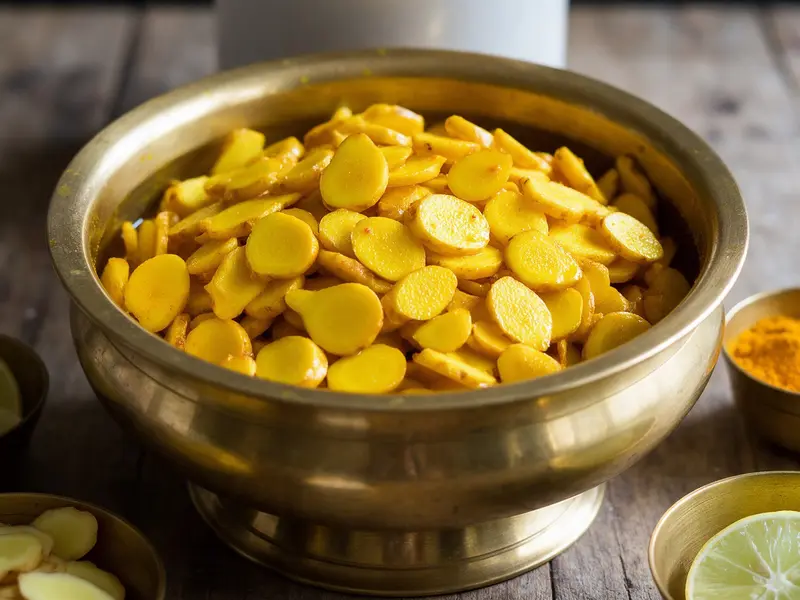
Amba haldi achar Few sources say this.
A bright quick pickle of fresh mango ginger in lemon juice with salt and turmeric, crisp and fragrant.
Taste: Tangy with lemon. Served chilled, light and refreshing. Made mostly from lemon.
Amba Haldi Achar (in lemon juice) Few sources say this.
Ingredients
- 120 g amba haldi, peeled, thin rounds or julienne
- 2 large lemons lemon juice, juiced
- ½ tsp salt
- ¼ tsp turmeric powder
Method
- Peel the amba haldi and slice into thin rounds or matchsticks.
- Put the pieces in a sterilised jar with lemon juice, salt and turmeric and mix well.
- Refrigerate; it can be eaten straight away and goes well with rice dishes.
Maa Inji Pickle (mango ginger sauteed in sesame oil with mustard and fenugreek)
Ingredients
- 250 g mango ginger (maa inji), peeled, cut into thin strips or finely chopped
- 3 tbsp sesame oil, gingelly oil, for sauteing
- 1 tbsp salt, or as needed
- 1 tsp turmeric powder
- 2 tbsp Kashmiri red chilli powder
- 2 tsp mustard seeds, for the spice powder
- 1 tsp fenugreek seeds, for the spice powder
- ¼ cup lemon juice, or vinegar
- ¼ cup sesame oil, gingelly oil, for tempering
- 1 tsp mustard seeds, for tempering
- ½ tsp fenugreek seeds, for tempering
- 2 dried red chillies
- 2 sprig curry leaves
- ¼ tsp asafoetida
Method
- Wash the mango ginger well, since it can hold soil, then peel and cut into thin strips or chop finely.
- Dry roast the mustard and fenugreek seeds for the spice powder, let them cool and grind fine.
- Heat 3 tbsp sesame oil and saute the mango ginger for 3 to 5 minutes. Add the salt and turmeric, cover and cook on low until just tender.
- Stir in the chilli powder, the ground spice powder and the lemon juice or vinegar.
- Heat the remaining oil, add the mustard seeds, fenugreek, red chillies, curry leaves and asafoetida and let them sizzle for a minute. Pour over the pickle, mix and let it cool completely before jarring.
Tips for this version
- Use a clean, dry jar and spoon every time.
- Be generous with oil and salt; they help the pickle keep.
Maa Inji Pickle (instant, chopped with green chilli and lemon, mustard tempering)
Ingredients
- 3 mango ginger (maa inji), finger-sized pieces, peeled and finely chopped
- 1 green chilli, finely chopped
- ½ lemon, juiced
- salt, to taste
- 1 tbsp sesame oil, gingelly oil
- 1 tsp mustard seeds
- 1 pinch asafoetida
- curry leaves, a few optional
Method
- Peel the mango ginger and wash it well, then chop it finely with the green chilli.
- Mix in the lemon juice.
- Heat the oil and add the mustard seeds. When they splutter, add the curry leaves and asafoetida for a few seconds.
- Pour the tempering over the mango ginger, add salt and mix. Serve with curd rice.
Served with: curd rice
Tips for this version
- The tempering is optional; with just lemon and salt it is ready the moment it is mixed.
Tips
- Under official food standards, brine pickles need at least 12 percent salt, and in oil pickles the pieces should stay practically under oil.
- Do not make or store acidic pickles in copper, brass or lead utensils, which can leach harmful metals.
- Strong brines and heavy sugar syrups pull water out of bacterial cells by osmosis, so high-salt and high-sugar foods resist bacterial growth. Few sources say this.
- Yeasts and moulds can still grow in high-salt or high-sugar foods even when bacteria cannot, so pickles and preserves still need checking.
- Salt and sugar preserve food by binding water and lowering how much is available to microbes (water activity), so pickles, murabbas and salted foods resist spoilage. Few sources say this.
- Long-keeping pickles and chutneys are preserved with plenty of salt and/or sugar and fat, which is why they are eaten only a teaspoon or so at a time.
- Pickles are traditionally matured in glazed earthenware jars with muslin tied over the mouth, which lets excess moisture escape while keeping insects out; glass jars also work. Few sources say this.
- A white film that lies flat and looks chalky is usually yeast, which in vegetable ferments you skim off now and then; raised, fuzzy or coloured growth is mould.
- Pickles are not made with ghee because it turns solid when the weather is cold. Few sources say this.
- Follow the label: refrigerate shop-bought pickles after opening if directed, and low-salt pickles always; cold slows mould but does not stop it, so use a clean, dry spoon. Few sources say this.
- After serving, wipe the jar mouth clean and remove any brine or oil left on the rim. Few sources say this.