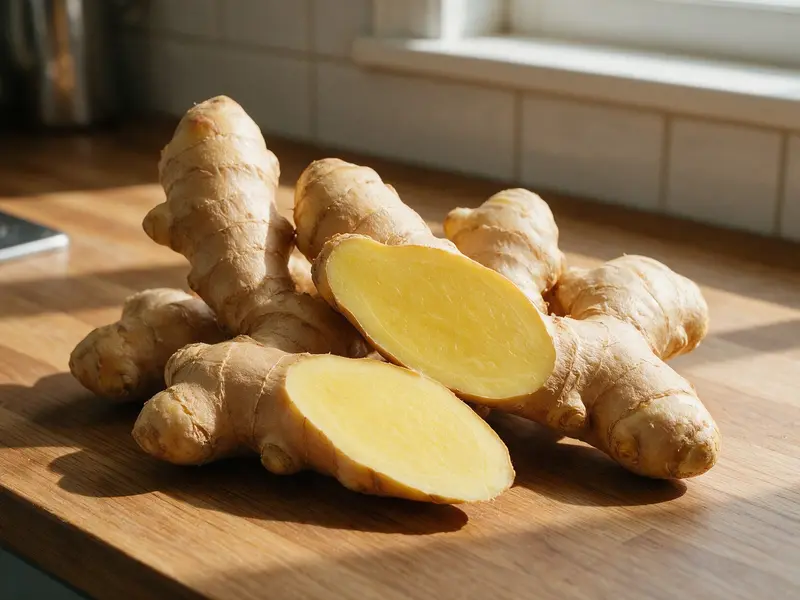
Mango ginger (amba haldi)
Creamy-white mango ginger root, crisp and juicy, with the green scent of raw mango and a soft turmeric warmth.
Used in
Seasons
Winter (Nov–Feb), availability; Winter (Nov–Feb), eaten
Regions
Gujarat, Himalayas (where it comes from)
Seasonal food wheel
- On the tongue: Spiced
- After the meal: Light
- Warmth: cooling
- Texture: medium
- Best seasons: spring
Questions answered
Useful tips
- Mango ginger: ginger looks, raw mango aroma. Mango ginger looks like beige-skinned ginger but smells and tastes of raw mango, so cooks use it in pickles and chutneys when green mangoes are unavailable.
- Ways to eat mango ginger. Mango ginger can be eaten raw, cut in thin salted strips beside dal and rice, pickled in just lemon juice and salt, or dried and ground.
- Serving amba haldi lemon-salt pickle. Mango ginger pickled with lemon and salt is eaten with rice dishes or added raw to salads. Few sources say this.
- Two roots called white turmeric. The name white turmeric is ambiguous: some cooks mean mango ginger (amba haldi), others zedoary, a different and more pungent root. Few sources say this.
- Maturing and keeping fresh turmeric pickle. In one method the turmeric and mango ginger pickle is sunned for a day, eaten from two days and refrigerated after three (temperature not stated).
- Fresh turmeric pickle is a Gujarati preparation. Fresh turmeric pickled in lemon is described as a Gujarati preparation and is served alongside dal, bean and paneer curries.
- One account of where amba haldi grows. Amba haldi is described as a Himalayan plant that reaches markets only during the monsoon. Few sources say this.