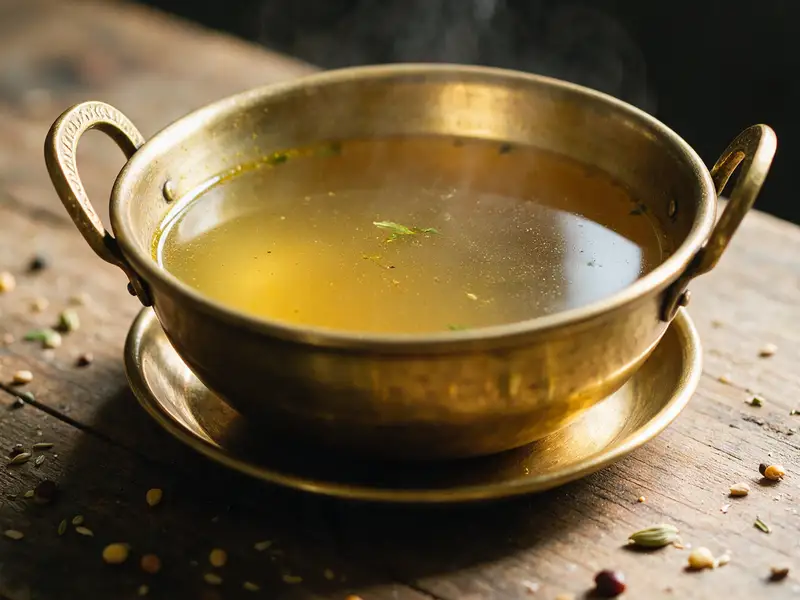
Soup base
The stock or liquid a soup begins with, and how to fix a soup that turns out too thin.
Also called: soup base, soup stock, soup stocks, vegetable stock, water or vegetable stock
If something goes wrong
Soup too thin
- High proportion of liquid
- Reduce some of the liquid. to rescue
- Start with less water next time. to prevent Few sources say this.
- Vegetables low in starch or fibre
- Add a cooked pulse or a starchy vegetable. to rescue
- Mash some of the cooked potato, squash or chickpeas against the pot and stir them back in. to rescue Few sources say this.
- Ingredients not blended
- Blend part of the cooked vegetables. to rescue
Questions answered
Useful tips
- Choosing additions for a soup base. Any salt already in the soup base, canned broth for example, needs allowing for, and the soup is best tasted and seasoned once more at the end. Few sources say this.
- Liquid for sweet corn soup. Half milk and half water makes a richer sweet corn soup, and vegetable stock instead of water adds flavour.
- Why soup is thin. Thin soup usually comes from too much liquid, low-starch vegetables or not enough blending. Few sources say this.
- Fixing a watery vegetable soup. A watery soup can be reduced to concentrate its flavour. Few sources say this.
- Thicken soup without cream. Thicken soup by reducing it, blending part of the vegetables, or adding cooked pulses or starchy vegetables, leaving some pieces for contrast.
- One base as soup or main. Adjust a base's thickness to its role: for example, sambar is made thinner to go with idli and thicker to eat with rice. Few sources say this.
- Salt broth near the end. A clear broth is usually best salted near the end, since evaporation concentrates it and salt is easier to judge at serving strength. Few sources say this.
- Leftover vegetables into soup. Soup is a good way to use up leftover vegetables from the fridge. Few sources say this.
- Build soup depth without stock cubes. Soup usually gains depth from aromatics, careful seasoning, and longer simmering or reduction. Few sources say this.
- Making soup more filling. A soup turns into a fuller meal when solids that suit it, like pulses, grains or vegetables, are added and the liquid rebalanced; extra thickness alone rarely makes it substantial. Few sources say this.
- Extracting flavour into a stock. To pull flavour into a stock, start the ingredients in cold water, heat gradually and simmer for a long time; the strained vegetables end up nearly tasteless. Few sources say this.
- Simmer tomato soup vegetables until very soft, then blend and strain. Simmer the vegetables with the tomatoes about 30 minutes until very soft, blend or mill them, and strain for a smoother soup. Few sources say this.
- Ground ginger for fresh in soup. In a puréed soup such as carrot-ginger, about 1 teaspoon of ground ginger can stand in for a thumb-sized piece of fresh ginger. Few sources say this.
- Finish puréed soups with lemon. A splash of lemon or orange juice added at the end lifts the flavour of a puréed vegetable soup. Few sources say this.
- Coriander leaf with soups. Fresh coriander leaf pairs well with soups, salsas and hot sauces. Few sources say this.
- Cook lentils in vegetable broth for more flavour. Simmer lentils in vegetable broth rather than plain water for more flavour, and cut back on added salt if the liquid or spice mix is already seasoned. Few sources say this.
- Less salt with stock cubes. Reduce the added salt when using ready-made stock cubes in a soup.
- Choose ripe, sweet tomatoes. Use ripe, juicy, bright red tomatoes that taste sweet-tangy; unripe or very sour ones make soups and gravies sour.
- Tomato in vegetable soup. In a mixed vegetable soup, add the tomato only after the water boils and the heat is lowered, cut in large cubes so it holds its shape. Few sources say this.
- Finishing a vegetable soup with milk. Cook the vegetables in stock until the soup is quite thick, then pour in milk bit by bit and simmer another 3-4 minutes to thin it to the right body. Few sources say this.
- Getting a smooth gahat shorba. For gahat ka shorba, cook the horse gram, then strain it, blend and strain it, or blend just part of it to thicken the soup.
- Finishing millet soup. Take out the bouquet garni, blend the soup, then reboil it and stir in a little fresh cream.
- Starch versus fat in mouthfeel. Starch and fibre raise a soup's viscosity, while fat changes mouthfeel and carries some aromas.
- Clear broth aroma. Clear broth depends on extracted compounds and aroma; heavy boiling or long holding mutes delicate aromas. Few sources say this.
- What makes a blended soup smooth or gummy. Blended soup texture depends on solids, particle size, starch, fibre and fat; fibrous vegetables stay grainy and over-blending can make starchy ones gummy. Few sources say this.
- Most Indian soups are vegetarian. Most Indian soups are built on vegetables and dal. Few sources say this.
- Soups belong to India's cold mountains, not the plains. The Indian plains have little soup tradition, while soups are central in the colder mountain regions. Few sources say this.